 se habla Español
Planning an event is exciting—until the logistics hit. Guest lists, menus, timelines, seating charts. Amid all the moving parts, one question consistently trips up hosts: how many servers do you actually need? Proper event server staffing is one of the most important factors in creating a smooth and enjoyable event.
Get it wrong, and the consequences are visible. Guests waiting too long for drinks. Plates sitting under heat lamps. A beautifully planned evening that feels chaotic simply because the staffing math was off. Get it right, and service becomes invisible in the best possible way—smooth, timely, and seamlessly woven into the experience.
This guide breaks down server-to-guest ratios for events of 100, 200, and 300 guests, with practical advice on how your venue, service style, and event type all factor into the equation.

Why Server-to-Guest Ratios Matter More Than You Think
Staffing an event isn’t just about having enough hands on deck. It’s about pacing. A skilled server team keeps the flow of an event moving—clearing plates before guests notice they’re empty, refilling glasses without being asked, and responding quickly when something goes wrong. Effective event server staffing helps maintain this level of service throughout the celebration.
The right ratio also affects your guests’ perception of quality. Even at a high-end venue with exceptional food, slow or inattentive service can leave a negative impression. On the flip side, attentive staffing elevates even a modest spread into something memorable.
Several key factors shape how many servers you’ll need:
- Service style: Plated dinners require more servers than buffet-style events
- Venue layout: Spread-out or multi-room venues need additional staff to cover ground
- Event type: Cocktail receptions, formal dinners, and casual parties each have different demands
- Menu complexity: Multi-course meals require more coordination and personnel than a simple two-course service
- Bar service: Dedicated bartenders are separate from your serving staff count
How Many Servers for 100 Guests?
For a seated, plated dinner with 100 guests, a general rule of thumb is one server per 10–12 guests. That puts your base number at roughly 8 to 10 servers for full table service. Proper event server staffing at this guest count helps ensure attentive service without unnecessary labor costs.
If you’re running a buffet-style event, you can reduce that number slightly—closer to one server per 25–30 guests for replenishing stations and clearing tables. However, you’ll still want dedicated staff at each food station to assist guests and maintain presentation.
For a cocktail reception with heavy appetizers and no formal seating, staffing needs shift again. Expect to need one server per 25–30 guests for passed hors d’oeuvres, plus additional staff for stationary food stations and the bar.
Staff breakdown for 100 guests (plated dinner):
- 8–10 servers
- 1–2 bartenders (depending on bar volume)
- 1 event captain or lead coordinator
How Many Servers for 200 Guests?
Doubling the guest count doesn’t simply mean doubling your server count—though it’s close. At 200 guests, you’re also contending with increased coordination demands and longer distances between the kitchen and tables.
For a formal plated dinner with 200 guests, plan for 16–20 servers, plus a dedicated event captain to manage the floor. A well-organized captain can make a meaningful difference at this scale, directing staff, communicating with the kitchen, and handling last-minute changes. Professional event server staffing becomes even more important as guest counts increase.
Buffet or stations-style service for 200 guests typically requires 10–12 servers for clearing and replenishment, with 2–3 additional staff per food station. At this guest count, you’ll also want to consider a dedicated catering manager or banquet coordinator to oversee the full operation.
Staff breakdown for 200 guests (plated dinner):
- 16–20 servers
- 2–3 bartenders
- 1–2 event captains
How Many Servers for 300 Guests?
At 300 guests, you’re firmly in banquet territory. Coordination becomes the central challenge. With this many people to serve, a staggered service approach is often used—sections of tables are served in sequence rather than all at once—which requires clear communication between staff and kitchen.
A plated dinner for 300 guests calls for approximately 25–30 servers, with multiple captains assigned to different sections of the room. Beverage service also scales significantly at this size; plan for at least 3–4 bartenders, particularly if you’re offering a full open bar.
Multi-course menus add another layer of complexity. If your event includes four or more courses, consider adding 2–3 additional servers to maintain pace without rushing guests.
Staff breakdown for 300 guests (plated dinner):
- 25–30 servers
- 3–4 bartenders
- 2–3 event captains or section leads
How Does Your Venue Affect Staffing Needs?
The right server-to-guest ratio can vary significantly depending on where your event is held. Venue layout, kitchen proximity, and the experience of the in-house team all play a role in event server staffing decisions.
Multi-room vs. single-room venues
A venue where guests are spread across multiple rooms, floors, or outdoor areas requires more staff to ensure consistent coverage. A single ballroom with a centralized kitchen is far easier to service efficiently than a sprawling estate with multiple dining areas.
In-house staffing vs. external catering teams
Many banquet halls and event venues provide in-house service staff as part of their package. This is a significant advantage. In-house teams know the space—where the kitchen staging area is, how the floor flows during service, and how to handle venue-specific challenges. External catering teams working in an unfamiliar venue often need more lead staff and additional time for setup and orientation.
Kitchen-to-floor distance and staging capacity
The further the kitchen is from your guests, the longer each service round takes. Venues with well-designed service corridors, ample staging areas, and efficient kitchen layouts allow servers to work faster, which can reduce the total headcount needed.
Planning Your Event at a Professional Banquet Venue
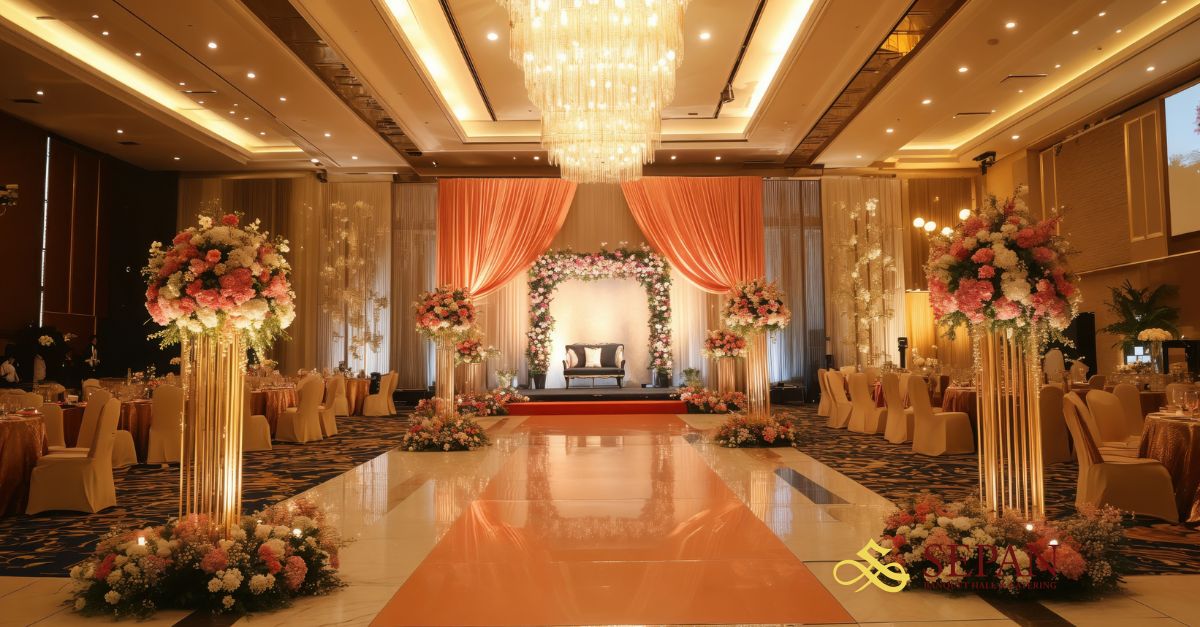
Choosing a professional banquet hall takes much of the guesswork out of staffing. At Sepan Banquet Hall in Glendale, experienced event coordinators handle the staffing logistics for you. With a dedicated team that has served hundreds of celebrations—from intimate receptions to full-scale banquets—Sepan brings the expertise needed to ensure your event runs without a hitch.
Rather than calculating ratios on your own and coordinating external vendors, working with a venue that provides in-house service lets you focus on what matters: enjoying the occasion.
Final Thoughts: Staffing Is an Investment, Not an Afterthought
The number of servers at your event directly shapes the experience your guests walk away with. Too few, and the evening drags. Too many, and you’re over budget without added benefit. The sweet spot depends on your guest count, service style, and the capabilities of your venue.
As a quick reference:
| Guests | Plated Dinner Servers | Bartenders | Captains |
| 100 | 8–10 | 1–2 | 1 |
| 200 | 16–20 | 2–3 | 1–2 |
| 300 | 25–30 | 3–4 | 2–3 |
These figures are strong starting points, but the best approach is to consult with your venue early. A knowledgeable banquet team will assess your specific event and recommend staffing that fits your menu, timeline, and floor plan.
Ready to start planning? Call Sepan Banquet Hall in Glendale to schedule an appointment. Our team is here to help you design an event that’s polished, personal, and exactly what you envisioned.
Frequently Asked Questions
What is the standard server-to-guest ratio for a formal dinner?
For a formal, plated dinner, the standard ratio is one server for every 10–12 guests. This ensures timely service across multiple courses without guests waiting between plates.
Do I need more servers for a buffet than a plated dinner?
No—buffet-style events generally require fewer servers. A ratio of one server per 25–30 guests is typical for a buffet, though you’ll still need dedicated staff at each food station and for table clearing.
How many bartenders do I need for a 200-person event?
Most event planners recommend one bartender per 50–75 guests for a full open bar. For 200 guests, plan for 2–3 bartenders to avoid long wait times, especially during peak service periods like cocktail hour.
Does venue layout affect how many servers I need?
Yes. Multi-room or multi-level venues require additional staff to ensure coverage across all areas. A compact, single-room venue with a centralized kitchen is typically more efficient to staff.
What is an event captain, and do I need one?
An event captain is a lead staff member who manages the service team on the floor, coordinates with the kitchen, and handles any real-time issues. For events of 100 or more guests, at least one event captain is strongly recommended.
Should I hire through the venue or bring in an external catering team?
Whenever possible, working with in-house venue staff is advantageous. They know the space, require no orientation time, and are typically more efficient. Many banquet halls, including Sepan Banquet Hall in Glendale, include experienced service staff as part of their event packages.