 se habla Español
The Persian Sofreh Aghd is one of the most breathtaking wedding traditions in Persian culture. A ceremonial spread laid out with symbolic objects, each carefully chosen to bless the couple’s union, it serves as the heart of the ceremony—a focal point that guests will remember long after the last dance.
But translating this intimate, deeply personal tradition into a banquet hall setting takes more than good taste. It takes planning, spatial awareness, and a genuine understanding of what each element means. Get it right, and your Sofreh becomes a work of art. Get it wrong, and even the most beautiful objects can feel lost in a large venue.
Whether you’re planning a grand celebration or a more intimate affair, here’s everything you need to know about setting up a Persian Sofreh Aghd that honors tradition—and looks absolutely stunning.
What Is a Sofreh Aghd, and Why Does the Setup Matter?
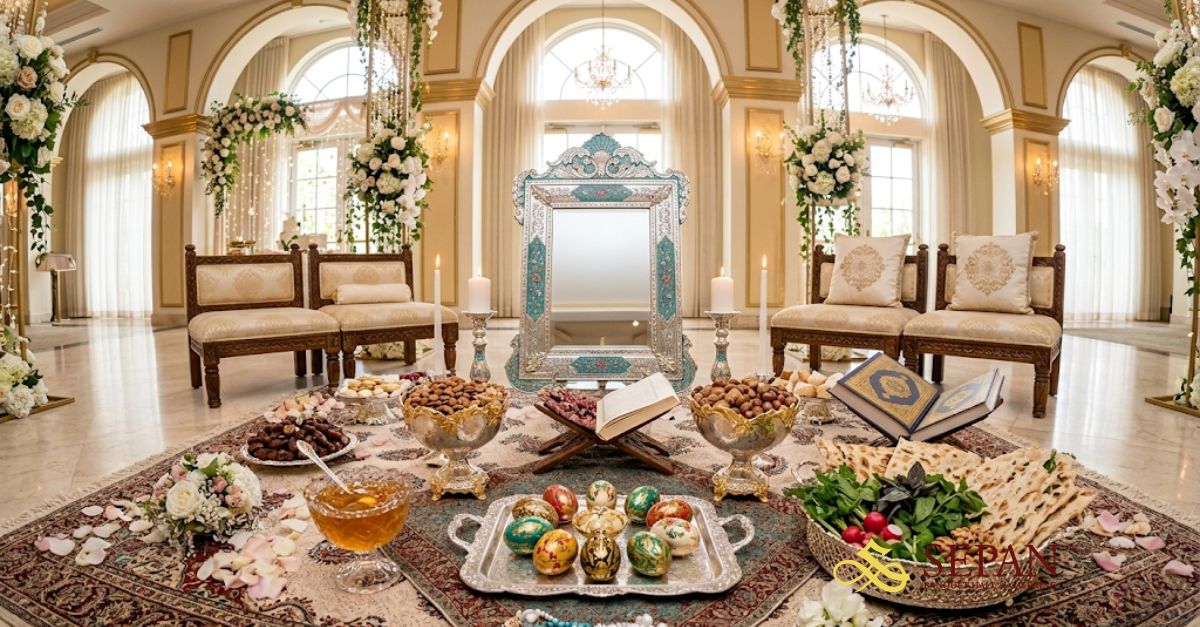
A Sofreh Aghd (literally “the spread of marriage”) is a ceremonial tablecloth adorned with a curated collection of symbolic items. These typically include a mirror and candelabras (representing brightness and clarity), herbs and spices (for prosperity), honey (for sweetness in marriage), eggs and nuts (for fertility), bread (for abundance), and a holy book or poetry collection.
Each object has meaning. Each placement is deliberate. And because the ceremony unfolds around this spread—with the couple seated before it and guests gathered around—the setup directly shapes how the ceremony feels, flows, and photographs.
In a banquet hall, you have both an opportunity and a challenge. The space is generous, the lighting is controllable, and the backdrop can be customized. But scale matters. A Sofreh that works beautifully in a small living room can look sparse on a large banquet stage. The setup must be calibrated to the venue.
Choosing the Right Location Within the Banquet Hall
Before anything else, identify the ideal spot for the Sofreh within the venue. Most banquet halls have a natural focal point—a stage, a decorative wall, or a raised platform. This is typically the best place to begin.
A few things to consider:
- Lighting access: The Sofreh should be well-lit, both for the ceremony and for photography. Natural light from a window can be beautiful during daytime ceremonies; for evening events, soft warm lighting works best.
- Visibility: Guests should be able to see the Sofreh clearly from their seats. Avoid placing it in a corner or against a wall that creates visual obstructions.
- Space for the couple: The bride and groom will be seated at the Sofreh during the ceremony. Leave enough room on either side for attendants and family members to stand comfortably.
- Aisle access: If you’re planning a ceremonial walk, map out how the couple will approach the Sofreh and ensure the path is unobstructed.
How to Scale the Sofreh for a Banquet Hall Setting
Choosing the Right Sofreh Fabric and Size
The fabric of the Sofreh sets the tone for everything else. Traditional choices include hand-embroidered termeh (a richly woven Persian fabric), silk, or velvet. In a banquet hall, opt for a larger spread than you might use at home—a small cloth can look underwhelming on a long table or wide stage.
If you’re using a table, choose one that’s proportionate to the space. A 6- to 8-foot table works well for most banquet hall setups. Drape the Sofreh fabric generously, allowing it to flow over the edges for an elegant, full look.
Arranging the Symbolic Elements
The arrangement of elements on the Sofreh follows tradition, but within those traditions, there’s room to create something visually spectacular. Here are some tips for achieving a balanced, beautiful spread in a larger space:
- Build height: Use tiered risers or decorative stands to create visual layers. Place the mirror and candelabras at the back as the tallest elements, then layer forward with progressively lower items.
- Frame with florals: Fresh flowers—typically white roses, gardenias, or fragrant blooms—add color and softness. In a banquet hall, you can afford to be generous with floral arrangements flanking the Sofreh.
- Cluster items intentionally: Group related items together to avoid a scattered look. For instance, the herbs and spices can be arranged in a row of matching bowls, creating a sense of order and symmetry.
- Consider the photography angle: Most Sofreh photos are taken from the front and slightly above. Step back and view your setup from that angle to make sure nothing important is hidden.
Backdrop and Ambiance: Creating the Full Visual Experience
The Sofreh doesn’t exist in isolation. What surrounds it is just as important as what sits on it.
Floral and Draping Backdrops
A floral wall or draped fabric backdrop immediately elevates the visual impact of the Sofreh. White, blush, and gold are classic combinations for Persian weddings. If your banquet hall has a plain wall behind the ceremony area, work with your decorator to transform it into something worthy of the occasion.
Lighting Design for the Ceremony Area
Soft, warm lighting makes the mirror gleam, the candelabras glow, and the fabrics shimmer. Avoid harsh overhead lighting directly above the Sofreh—it flattens the visual depth. Instead, use uplighting around the perimeter, spotlighting from above at a slight angle, and candlelight where possible.
Seating Arrangement for Guests
Guests attending the ceremony need clear sightlines to the Sofreh. Arrange seating in a gentle arc or semicircle in front of the spread, rather than in rigid straight rows. This creates a more intimate atmosphere and ensures everyone can see the couple clearly.
The Final Touches That Make All the Difference
A few details consistently separate a beautiful Sofreh setup from a truly memorable one:
- Fresh versus artificial flowers: Wherever possible, choose fresh flowers. The fragrance adds a sensory dimension that artificial flowers simply can’t replicate.
- Calligraphy signage: A custom piece of Persian calligraphy—perhaps a line from Hafez or Rumi—displayed near the Sofreh adds a personal and culturally meaningful touch.
- Cohesive color palette: Every element, from the fabric to the flowers to the fruit, should feel like it belongs to the same visual story. Choose a palette early and refer back to it throughout your planning.
- Professional setup time: Allow at least two to three hours for setting up the Sofreh on the day of the event. Rushing this process leads to mistakes.
Make Your Sofreh Aghd Unforgettable at Sepan Banquet Hall
The Persian Sofreh Aghd deserves a venue that understands its significance—one with the space, the ambiance, and the experience to help it shine. At Sepan Banquet Hall in Glendale, we specialize in turning meaningful occasions into extraordinary celebrations.
Our team has hosted countless Persian weddings and ceremonies, and we know exactly what it takes to present a Sofreh Aghd with the elegance and respect it deserves. From lighting and layout to décor coordination and day-of setup, we’re here to make the experience seamless.
Give us a call to schedule an appointment and see firsthand why Sepan Banquet Hall is the venue of choice for tasteful weddings, receptions, and celebrations across the greater Los Angeles area.