 se habla Español
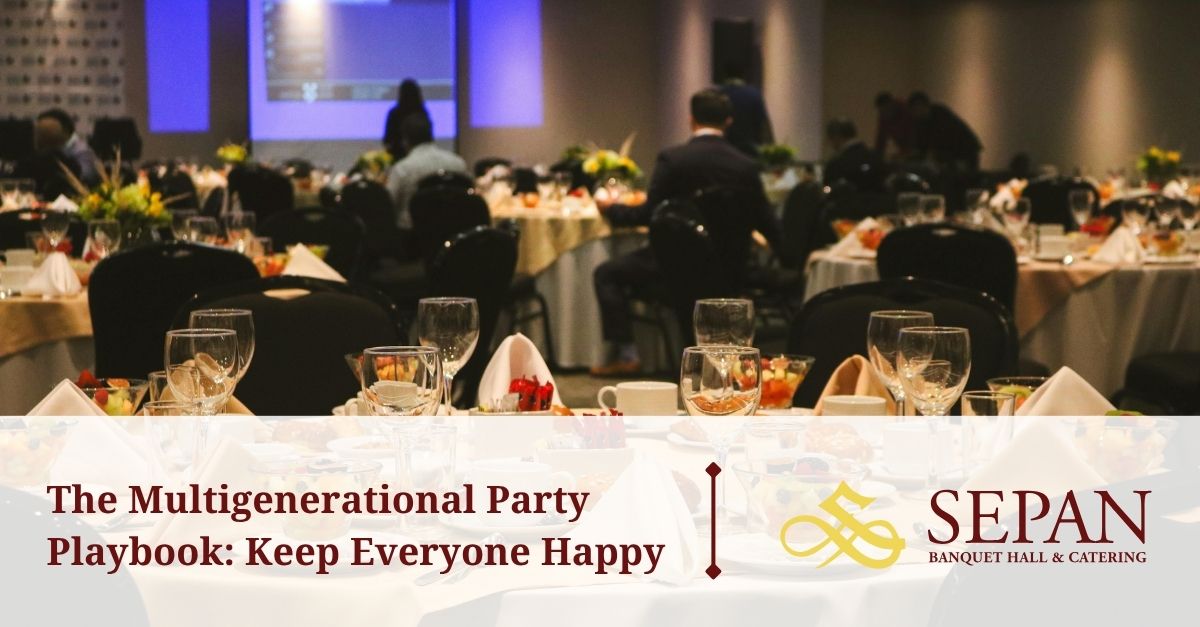
Hosting a party for multiple generations means balancing different energy levels, music tastes, dietary needs, and attention spans—all at once. The key is thoughtful planning: structured activities for kids, social spaces for adults, and enough flexibility for teens to find their own fun. Get the banquet hall right, and everything else becomes much easier.
Picture a family reunion where grandma is doing the cha-cha, the kids are elbow-deep in a craft project, and the teenagers have actually put their phones down to join in. It sounds like a fantasy—but with the right planning, it’s completely achievable.
Multigenerational celebrations are some of the most meaningful events you’ll ever host. Milestone birthdays, anniversaries, graduations, holiday parties—these are the gatherings that get talked about for years. But they also come with a unique challenge: how do you keep a 70-year-old and a 7-year-old equally entertained at the same event?
The answer isn’t a single magic trick. It’s a combination of smart layout choices, thoughtful programming, food that works for every palate, and a perfect banquet hall.
Why Multigenerational Events Are Worth the Extra Planning
Before diving into tactics, it’s worth understanding what makes these gatherings so uniquely challenging—and rewarding.
Each generation brings different expectations to a party. Older guests often value conversation, comfort, and familiar music. Parents tend to split their attention between socializing and supervising their kids. Teenagers want autonomy and, if they’re being honest, would rather be anywhere else unless something genuinely catches their interest. Young children need structured activities, familiar foods, and regular breaks.
Trying to design one experience that satisfies all of these groups simultaneously is the central puzzle of multigenerational event planning. But when you get it right, these events create the kind of cross-generational bonding that simply doesn’t happen at age-specific gatherings.
How to Set Up Your Banquet Hall for Multiple Generations
The physical layout of your event does most of the heavy lifting. A well-organized space naturally guides guests toward what they need without requiring a schedule or emcee.
Creating Distinct Zones That Serve Different Needs
Think of the banquet hall in terms of energy levels, not age groups. You want:
- A quiet lounge area with comfortable seating, softer lighting, and lower music volume. This is where grandparents can have real conversations and parents can catch a break.
- An active social zone with room to stand, mingle, and dance—closer to the music and energy of the event.
- A dedicated kids’ space with supervised activities, age-appropriate snacks, and enough room to move around without disturbing other guests.
- A teen-friendly corner with games, photo opportunities, or a charging station. Teenagers are far more likely to engage when they feel like they have a space that belongs to them.
The best banquet hall’s offer flexible room configurations that make this kind of zoning easy. At Sepan Banquet Hall in Glendale, the space is designed to accommodate exactly this kind of thoughtful layout—giving you the room to create a celebration that genuinely works for everyone, not just your youngest or oldest guests.
Getting the Seating Right
Assigned seating isn’t just for weddings. At any large family gathering, strategic seating choices can spark conversations that wouldn’t otherwise happen. Mix generations at tables rather than defaulting to “kids table” and “adults table.” Seat a talkative teenager next to a grandparent with great stories—you might be surprised what happens.
That said, keep older guests away from speakers and main traffic areas. Noise fatigue is real, and a loud environment can make it genuinely difficult for some guests to enjoy themselves.
What Activities Actually Work for Every Generation?
Here’s where most hosts go wrong: they plan activities for kids and assume adults will just talk. In reality, the best multigenerational parties offer something engaging for every age group—and at least one or two activities that bring different generations together.
Activities That Bridge the Age Gap
Photo memory stations work beautifully at milestone celebrations. Set up a display of family photos across the decades and watch grandparents and grandchildren end up in the same conversation, pointing at the same pictures. It requires zero facilitation and creates genuine connection.
Low-stakes lawn games like cornhole, bocce, or giant Jenga are accessible across age groups. They don’t require athleticism, they’re easy to learn, and they create natural opportunities for friendly competition between generations.
A “share your story” activity at anniversary or birthday celebrations—where guests write a favorite memory or piece of advice on a card—gives older guests a meaningful role and creates a keepsake the guest of honor will treasure.
Keeping Kids Engaged Without a Full Entertainment Budget
Young children need structured, supervised activity. A craft table with a theme tied to the occasion (decorating frames, painting rocks, making cards) keeps them occupied and gives them something to take home. If your budget allows, a face painter or balloon artist for the first hour keeps the energy positive while parents get to settle in.
For slightly older kids (ages 8–12), a scavenger hunt around the banquet hall is a reliable hit. It’s self-directed, burns energy, and doesn’t require continuous adult supervision.
What Actually Gets Teenagers Involved
Teenagers are the hardest group to engage at family events—and the most likely to spend the evening staring at a screen if nothing holds their attention. A few approaches that genuinely work:
- Give them a role. Asking a teenager to manage the music playlist, run a photo booth, or help coordinate an activity gives them ownership and a reason to be present.
- Set up a dedicated photo or video station with props. Teens are social-media-native—a fun setup they can actually photograph is more appealing than you might expect.
- Lawn sports and team games work well when the stakes are low and the humor is high. Teens are more likely to join in when the activity feels casual rather than forced.
Food and Drink: Navigating Multiple Generations at the Table
Few things derail a party faster than a menu that doesn’t work for half the guests. Multigenerational food planning requires more thought than a standard adult gathering.
Building a Menu That Works for Everyone
The safest approach is variety over volume. Rather than selecting a single cuisine or set menu, offer a spread that includes:
- Familiar classics that older guests recognize and enjoy
- At least one vegetarian and one gluten-friendly option to accommodate dietary restrictions
- Kid-friendly staples like sliders, pasta, or finger foods that don’t require cutlery skills or adventurous palates
- A few elevated options for guests who want something more interesting
Buffet-style service works particularly well for multigenerational events because it lets each guest self-select rather than committing to a set dish. It also encourages movement and mixing between courses.
Don’t Forget the Non-Alcoholic Options
A well-stocked non-alcoholic bar is often overlooked—but it matters. Designated drivers, pregnant guests, teenagers, children, and guests who simply don’t drink all deserve interesting options beyond water and soda. Sparkling lemonade, mocktail stations, or a specialty coffee and tea setup signals that every guest was considered.
Timing and Flow: How to Structure a Multigenerational Event
The pacing of your event matters as much as the content. A multigenerational celebration that runs too long without structure will lose its youngest guests to meltdowns and its oldest guests to fatigue.
A general framework that works well:
- Arrival and welcome (30–45 minutes): Light food, background music, casual mingling. Let people settle in before the program begins.
- Main meal and toasts (60–90 minutes): The anchor of the event. Keep speeches brief and meaningful—three minutes per speaker is a good rule of thumb.
- Activities and entertainment (60–90 minutes): This is where your generational programming shines. Run kids’ activities during this window, keep the dance floor open, and let the energy of the room guide the pace.
- Wind-down and farewell (30–45 minutes): Dessert, photo opportunities, and natural conversations as the event closes out.
Building in a defined “kids’ portion” of the event—where activities and entertainment are clearly centered on younger guests—also gives parents permission to relax during other parts of the program.
Choosing the Right Banquet Hall Makes Everything Easier
Every tactic in this guide becomes harder to execute in the wrong space. A banquet hall that’s too small creates sensory overload. A banquet hall without flexible layout options makes zoning impossible. A venue with poor acoustics turns background music into a wall of noise that shuts down conversation.
The right banquet hall doesn’t just host your event—it enables it. Look for spaces that offer flexible configurations, quality catering options, and staff who have experience with large, diverse gatherings.
At Sepan Banquet Hall in Glendale, the team specializes in exactly this kind of celebration. From intimate family gatherings to large multi-generational receptions, Sepan combines a sophisticated setting with the practical flexibility that complex guest lists demand.
The Most Important Ingredient: Intentionality
The best multigenerational parties don’t happen by accident. They’re the result of hosts who thought carefully about every age group in the room and made deliberate choices to include them. That’s not complicated—it just requires asking the right questions early enough in the planning process.
What will the 8-year-olds do during the speeches? Where will grandma sit so she can hear the toasts? What activity might actually get the teenagers off their phones? When you answer those questions before the day of the event, you stop troubleshooting and start celebrating.
Ready to start planning? The team at Sepan Banquet Hall in Glendale is here to help you bring it all together. Give us a call to schedule an appointment and see firsthand why Sepan is the banquet hall of choice for tasteful events, celebrations, receptions, and parties across Southern California.